
In the fast-changing world of digital marketing, staying ahead of search trends can make or break your brand’s online visibility. For years, Search Engine Optimization (SEO) has been the cornerstone of every digital marketing strategy. But as artificial intelligence evolves, a new era is emerging — Generative Engine Optimization (GEO).
In 2025, marketers can no longer rely on traditional SEO tactics alone. Understanding the difference between GEO vs SEO is crucial to maintaining visibility, authority, and engagement in an increasingly AI-driven digital ecosystem.
What Is SEO (Search Engine Optimization)?
Search Engine Optimization (SEO) is the strategic process of improving your website’s visibility and ranking on major search engines such as Google, Bing, and Yahoo. The primary goal of SEO is to attract organic (non-paid) traffic by ensuring your website appears at the top of search results when users search for relevant keywords or topics. The better your rankings, the more likely users will visit your website and engage with your content, products, or services.
SEO is built on three core pillars:
✅ On-Page SEO – This involves optimizing individual pages to ensure search engines understand your content clearly. It includes using strategic keywords, optimizing titles and meta descriptions, improving headings, image alt text, internal linking, and delivering valuable and relevant content that satisfies user intent.
✅ Off-Page SEO – This focuses on building your website’s authority and credibility in the eyes of search engines. The main component is acquiring high-quality backlinks from reputable websites, along with online brand mentions, social signals, and trust-building strategies that enhance your domain authority.
✅ Technical SEO – This ensures your website’s structure and performance help search engines crawl and index your pages without issues. Key practices include improving page loading speed, mobile-friendliness, secure browsing (HTTPS), structured data markup, fixing broken links, and ensuring a clean, user-friendly site architecture.
Traditionally, SEO has been driven by search engine algorithms that analyze content quality, keyword usage, user experience, and engagement metrics like click-through rates and time on page. Sites that deliver valuable, relevant, and technically sound content have historically ranked higher.
However, as we step into 2025, the search landscape is undergoing a revolutionary transformation. Search engines are evolving from keyword-based systems to AI-driven, conversational search experiences. This shift has introduced a new era known as Generative Engine Optimization (GEO) — a strategy designed to optimize content for AI search assistants and generative search platforms, ensuring your brand remains visible in AI-driven answers and summaries.
SEO remains essential, but adapting to Generative Engine Optimization is the next big step for future-ready digital marketers and website owners.
What Is GEO (Generative Engine Optimization)?
Generative Engine Optimization (GEO) represents the future of search visibility in a world dominated by AI-driven search systems. Unlike traditional SEO, which concentrates primarily on ranking web pages in Google search results, GEO is specifically designed to optimize content for generative AI platforms such as ChatGPT, Google Gemini, Perplexity AI, and other emerging AI search engines.
The goal of GEO is not just to target keywords — but to train AI systems to understand, reference, and reproduce your content when answering user queries. This means your content needs to be formatted, structured, and written in a way that AI models can easily interpret, trust, and use as a knowledge source.
Instead of only competing for search engine rankings, GEO positions your brand to be discovered inside AI-generated responses: from chat-based answers and summarised insights to conversational search results and voice-assistant replies. In simple terms, GEO helps your business appear where users are increasingly getting their information — inside AI-powered conversations, not just on search engine pages.
How Generative Engine Optimization Works
- AI Search Understanding: GEO-friendly content is structured so AI systems can interpret it contextually, not just semantically.
- Conversational Integration: Instead of ranking on a list, your content becomes part of an AI’s conversational answer.
- Trust and Authority Signals: AI models prefer citing authoritative, original, and human-aligned sources.
So, while SEO optimizes for search engines, GEO optimizes for generative engines — the new platforms where users are now searching and discovering information.
In short:
✅ SEO is about ranking.
✅ GEO is about being referenced and recommended by AI.
Why Generative Engine Optimization Matters in 2025
As more users shift to AI-driven searches, brands that don’t adapt risk losing visibility. Here’s why Generative Engine Optimization matters more than ever in 2025:
1. AI Search Is Replacing Traditional Search
AI tools like ChatGPT Search, Perplexity, and Gemini 2.0 now generate answers directly, bypassing traditional SERPs.
This means users no longer need to “click” — they just “ask.”
If your content isn’t optimized for Generative Engines, it might never be seen.
2. GEO Prioritizes Human-Centered Value
Generative models prioritize expertise, experience, and trust — aligning with Google’s E-E-A-T (Experience, Expertise, Authoritativeness, Trustworthiness) principles.
Generative Engine Optimization ensures your content is authentic, credible, and genuinely helpful — exactly what AI systems want to recommend.
3. It Future-Proofs Your Content
GEO isn’t a replacement for SEO; it’s an evolution.
By incorporating Generative Engine Optimization today, you’re preparing your content to stay discoverable even as search technology changes.
4. Voice and Conversational AI Are the Future
Voice search and AI chat interfaces are rapidly growing. When someone asks an AI assistant for a recommendation, you want your brand to be part of that answer.
That’s where Generative Engine Optimization comes in.
How to Optimize for Generative Engine Optimization (GEO)
Implementing GEO doesn’t mean abandoning SEO — it means upgrading your strategy.
Here’s how to get started:
1. Write for Context, Not Just Keywords
SEO was about keyword density.
GEO is about semantic depth — writing content that covers a topic thoroughly and contextually.
Focus on intent, questions, and real human problems.
2. Build Authoritative, E-E-A-T Aligned Content
Generative engines pull from trusted and credible sources.
Make sure your site reflects expertise, authorship transparency, and real experience.
Include author bios, credentials, and case studies.
3. Optimize for Conversational Queries
Use natural language and long-tail questions.
Example:
Instead of optimizing for “digital marketing trends”, try “What are the top digital marketing trends for small businesses in 2025?”
This aligns with how users interact with AI chatbots.
4. Leverage Structured Data
Use schema markup and metadata so generative models can identify, summarize, and cite your content.
Structured data bridges the gap between SEO crawlers and AI readers.
5. Maintain High-Quality, Updated Content
AI engines prefer fresh and factual data.
Regularly update your blogs, statistics, and insights to remain relevant in Generative Engine Optimization rankings.
How GEO Complements SEO
Instead of thinking GEO vs SEO as a competition, consider them two halves of a complete digital strategy.
- SEO ensures visibility on traditional search engines.
- GEO ensures visibility on generative and conversational AI platforms.
When both are combined:
✅ Your website ranks on Google.
✅ Your brand appears in AI-generated summaries and conversations.
This dual optimization increases reach, brand authority, and trust — critical factors for digital marketing success in 2025.
The Role of E-E-A-T in GEO
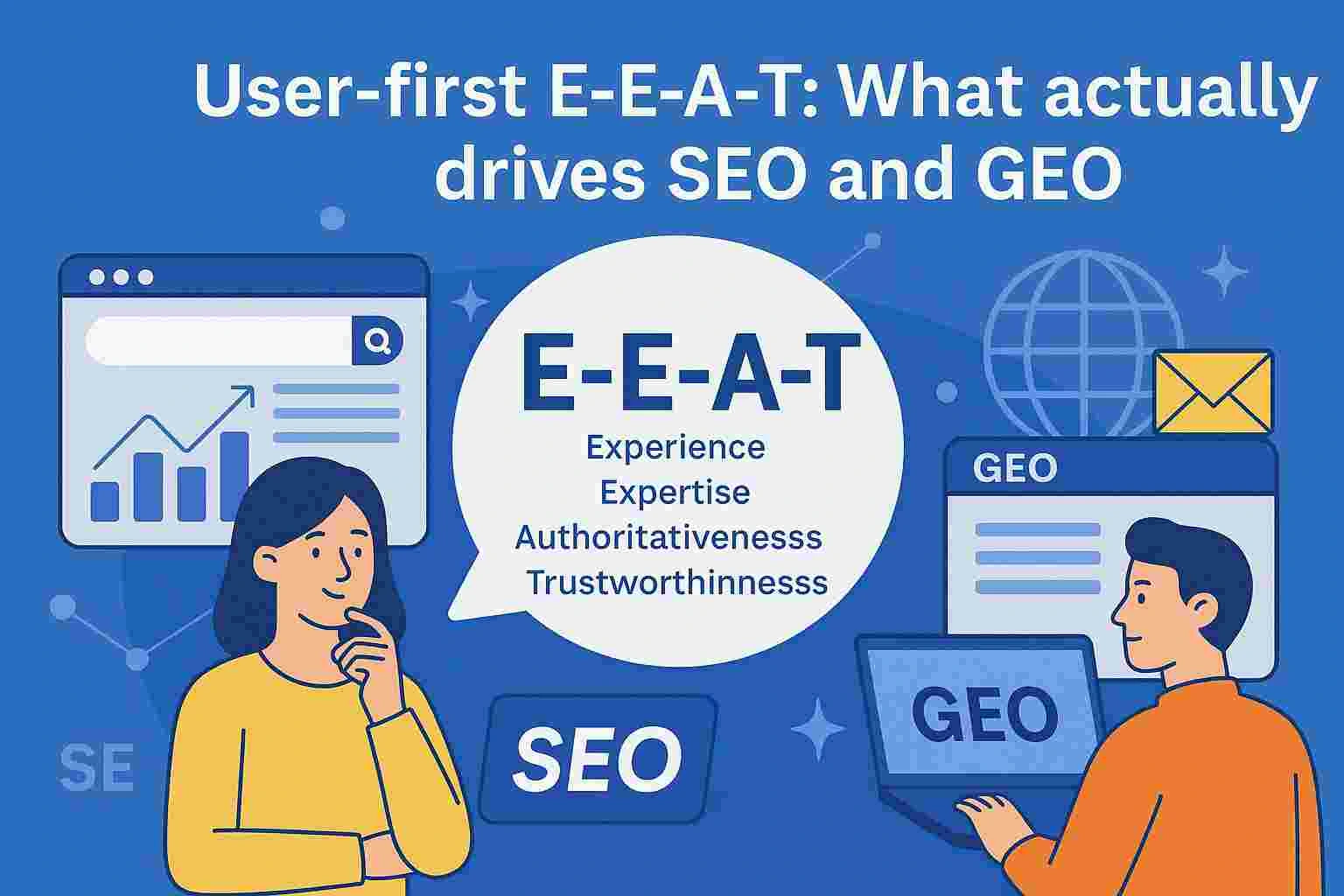
If Generative Engine Optimization is the future, E-E-A-T (Experience, Expertise, Authoritativeness, and Trustworthiness) is its foundation.
AI systems now evaluate these qualities before recommending content.
Here’s how to apply E-E-A-T to GEO:
- Experience – Share real-world examples and first-hand insights.
- Expertise – Write content by verified professionals in your niche.
- Authoritativeness – Build backlinks and get cited by credible sources.
- Trustworthiness – Use transparent authorship, privacy, and data practices.
When combined, E-E-A-T helps your Generative Engine Optimization strategy succeed by signaling that your content is reliable and worth citing.
Real-World Example: GEO in Action
Let’s say someone asks ChatGPT:
“What are the best digital marketing trends for 2025?”
If your article is optimized with Generative Engine Optimization, the AI model might reference your content in its answer — even without linking to it directly.
Your brand gains visibility, authority, and trust, even if users never visit your site traditionally.
This kind of exposure is becoming just as valuable as ranking #1 on Google.
Key Benefits of Generative Engine Optimization
✅ Increased AI Visibility – Your brand appears in AI-generated answers.
✅ Future-Proof Strategy – Adapts to evolving search behavior.
✅ Higher Engagement – Content resonates with real user intent.
✅ Authority Building – GEO leverages E-E-A-T principles to boost credibility.
✅ Omni-Channel Discovery – From search engines to voice assistants and chatbots.
GEO vs SEO: Which One Should You Focus On?
The short answer: Both.
SEO remains vital for website traffic and Google rankings.
But Generative Engine Optimization is essential to stay visible in AI-driven discovery.
In 2025 and beyond:
- Use SEO to attract traditional organic traffic.
- Use GEO to appear in AI-generated insights, voice responses, and chatbot answers.
Together, they form a complete search strategy that works across every platform where people find information.
The Future of Search Is Generative
The evolution of AI-powered search has completely transformed how people interact with information. Instead of simply browsing through lists of links, users now expect natural, meaningful conversations with search engines. They’re not looking to “search” in the traditional sense anymore — they want to “ask” a question, just like they would with a human expert, and receive a direct, reliable, and personalized answer within seconds.
This shift from keyword-driven results to context-aware, generative responses is redefining digital behavior and customer expectations. With systems like Google’s SGE and OpenAI-powered search platforms rising, the battleground for visibility is changing rapidly.
Brands that master Generative Engine Optimization (GEO) won’t just appear in search — they will shape the knowledge engines rely on. They will become the credible voices AI pulls from, the trusted sources users hear in responses, and the digital authorities guiding decision-making at scale. In this new era, visibility is not just about ranking — it’s about earning trust in the conversational ecosystem that fuels the future of search
Final Thoughts
In 2025, the conversation is no longer “SEO vs GEO” — it’s about how SEO and GEO can work together.
While SEO keeps your site visible in traditional search engines, Generative Engine Optimization ensures your brand is present, cited, and trusted in AI-generated content.
If you want your business to stay ahead, start optimizing now.
Embrace Generative Engine Optimization, adapt your content strategy, and future-proof your digital presence before the next algorithm — or AI model — changes the game again.